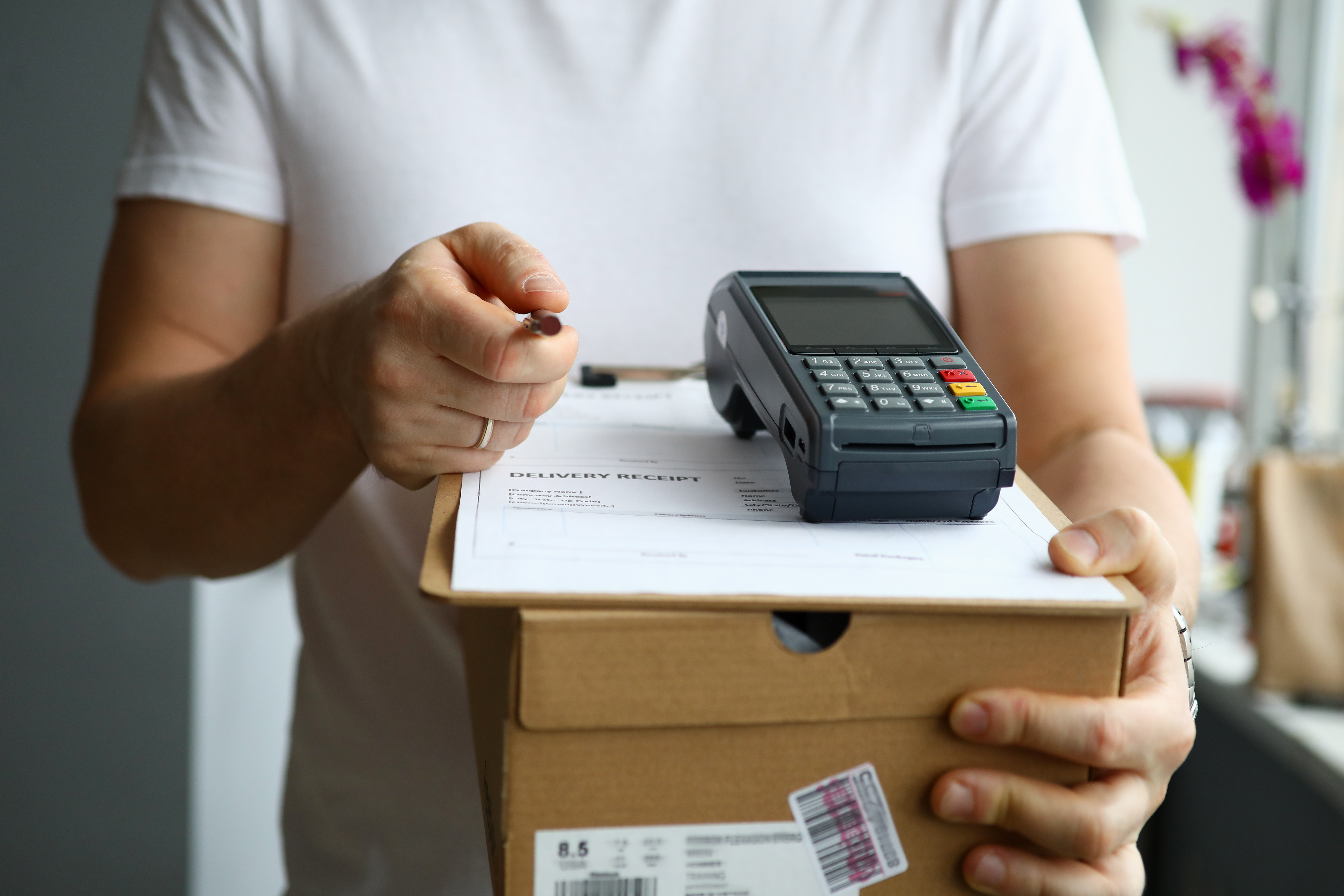
VISION builds software for retailers and retail networks: the systems that handle suppliers, contracts, orders, stock, stores and customers across a group of locations. The work usually begins where the packaged systems stop, with the processes that still run on spreadsheets, email and paper.
It sits alongside the point-of-sale and the ERP already in place. What it adds is the operational layer between them: purchasing and supplier work, contract handling, approvals, store and network processes, and the reporting head office needs across the whole estate.
Suppliers, purchasing and contracts
Purchasing runs as a defined flow rather than a chain of emails. Requests are raised against a catalogue, routed to the people responsible, and checked against approval thresholds set by level of authority before an order reaches a supplier. Provider orders can be aligned with actual customer demand.
Contracts are assembled from models and dynamic parameters, so commercial packages are built from rules agreed in advance rather than written from scratch each time. Service catalogues, contract models and authority levels are configuration, so the commercial team can change terms without waiting for a release.
Stores, stock and the order-to-delivery chain
Stock is held in a tree-structured product catalogue, and operations cover the full cycle from order through delivery, maintenance and service. Every step is traceable, from the order placed with a provider to the goods handed to the customer.
Store and network processes work the same way: each task has an owner, a state and a record. Head office sees the same data as the locations, through dashboards and reports built on live records.
Customers and the work after the sale
A self-service portal lets customers update their own details, check availability and place orders without going through a phone call. Sales and client management pulls company data and past interactions into one place, so whoever picks up the account sees what has already happened.
The rest of the relationship is handled in the same system: segmentation and portfolio management, customer service, collection, upselling, cross-selling and renewals, along with the records of cancelled contracts and former customers.
A B2B distribution platform in use
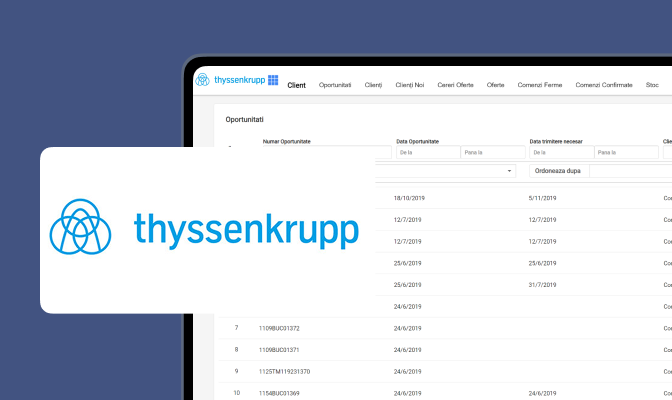
For a wholesale distributor operating in Romania, VISION built an integrated B2B platform on Vision 365, covering the flow from sales through to customer delivery. B2B buyers use a self-service portal to check stock, request offers and submit orders, while a pricing engine approves prices against predefined fees by customer and product type.
Warehouse work is tracked by barcode from reception until delivery, with a dedicated barcode reader application for use in the field. Back-office staff work on the same live data, with reporting and dashboards on top and integration with the client's ERP system.
It works with the systems you already run
Most retailers already have a point-of-sale, an ERP and an accounting system that are staying. The platform exchanges data with them, so product, stock, customer and financial records stay consistent instead of being re-keyed.
Built around your processes
All of this runs on Vision App Maker. Data structures, forms, business rules and workflows are configured around the way the organisation works, rather than the organisation being reshaped around the software.
That also decides what happens later. When a process changes, an approval level moves or a new commercial package is introduced, the configuration changes with it.