VISION builds and runs software for city halls, county councils and public institutions: the portals residents use, the registry and document flows staff work in, and the administrative modules behind them. The same platform serves communes of a few thousand people, sector city halls in Bucharest and national institutions.
Most administrations already run something: an accounting system, a tax application, a legacy registry, an agricultural register in its own tool. VISION supplies the layer that brings those into one set of records and one set of workflows, and replaces the parts still handled on paper. Modules are added as the organisation is ready for them, on the same platform, without a migration.
Services residents reach without coming to the counter
Residents and companies use an external portal that also runs as a mobile application and in self-service kiosk mode. They authenticate, submit requests, attach documents, book appointments and follow their own files in a private space. A request arriving online, by email, from a kiosk or across the counter enters the same registry and the same internal flow.
The portal covers urban planning, civil status, local taxes, social assistance, the agricultural register, petitions and public information requests, alongside a presentation site for the locality, published council business and participatory budgeting.
Registry, documents and approvals
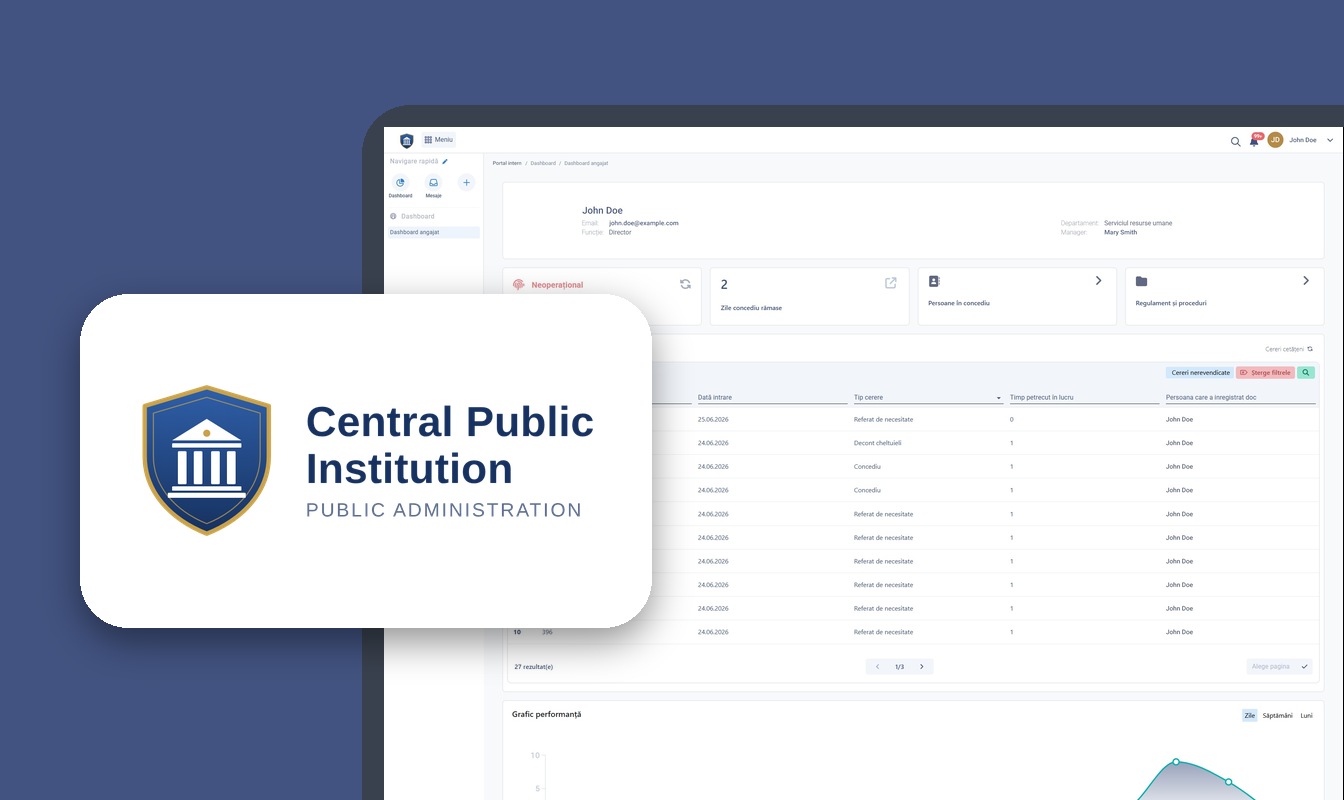
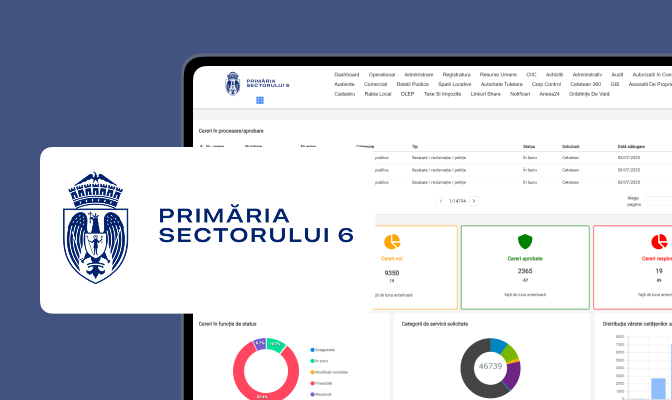
Every document receives a registration number and a timestamp on entry, then a route to the department that has to act on it. Files carry a unique identifier through their lifecycle, with versioning, electronic signature, deadline tracking and transfer to a legally authorised archive. Dashboards show requests in progress, exceeded deadlines and departmental workload. Permissions follow the organisational chart, and staff sign in once across every module.
The Smart Digital City module catalogue
The catalogue is grouped in four. The base platform covers the internal portal, registry, document management, organisational chart, citizen portal, dashboards and online appointments. Citizen and business services cover urban planning, public domain, civil status, succession, the agricultural register, commercial, transport, taxes, social assistance, local police, green spaces and kindergartens. Internal management covers the local council, human resources, procurement, budget, contracts, invoices, investments, assets, legal, internal audit, SCIM and internal ticketing. SMART+ adds Vision AI and smart-city IoT.
An administration can begin with a single module or the base package and add the rest later, on the same platform.
Projects already delivered
In Slobozia, Giurgiu County, 42 modules went into production six weeks from signature to acceptance, reachable through a web portal, a mobile application and an ID-card authenticated info-kiosk, with qualified electronic signature, electronic seal and an authorised archive procured alongside the software.
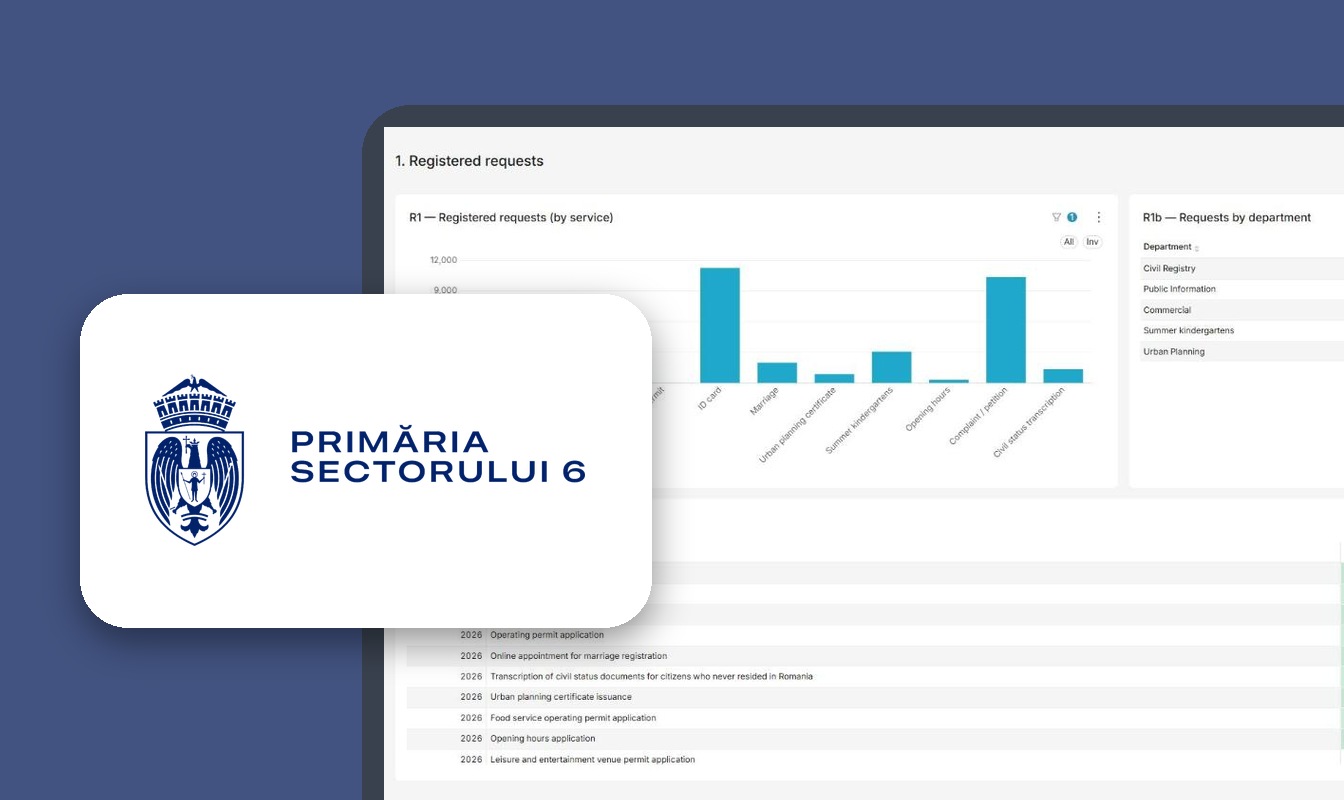
In Sarichioi, Tulcea County, five service areas moved online — public order and safety, social assistance, the agricultural register, local taxes and urban planning — while roughly 100,000 pages of archive were digitised at 600 dpi into searchable records, and thirty staff were trained over a twenty-week delivery. Sector 6 City Hall in Bucharest runs a unified platform for document handling and citizen services, with electronic registration reported 90% faster than before and records archived fully digitally. A national court uses the same approach for case management.
It works with the systems you already have
Integration runs through a plugin mechanism, so data can be imported from an ERP, CRM, DMS or legacy application. The platform interoperates with national registries and state systems, and procurement can be linked to SICAP. Integration points are mapped during analysis.
Built around your processes
The platform is built on Vision App Maker, a low-code environment with more than 100 implementations across government and the private sector. Data structures, forms, business rules and workflows are defined in a visual designer, and rules are written by anyone comfortable with a spreadsheet formula.
When a procedure or a legal requirement changes, the configuration changes to match, without a new development cycle.