VISION delivers a digital platform tailored for defence environments, helping armed forces and security organisations improve operational efficiency, situational awareness and decision-making through integrated IoT, analytics and process automation. Built on a modular architecture, it connects physical assets, personnel and processes into one digital environment, from command centres to field operations.
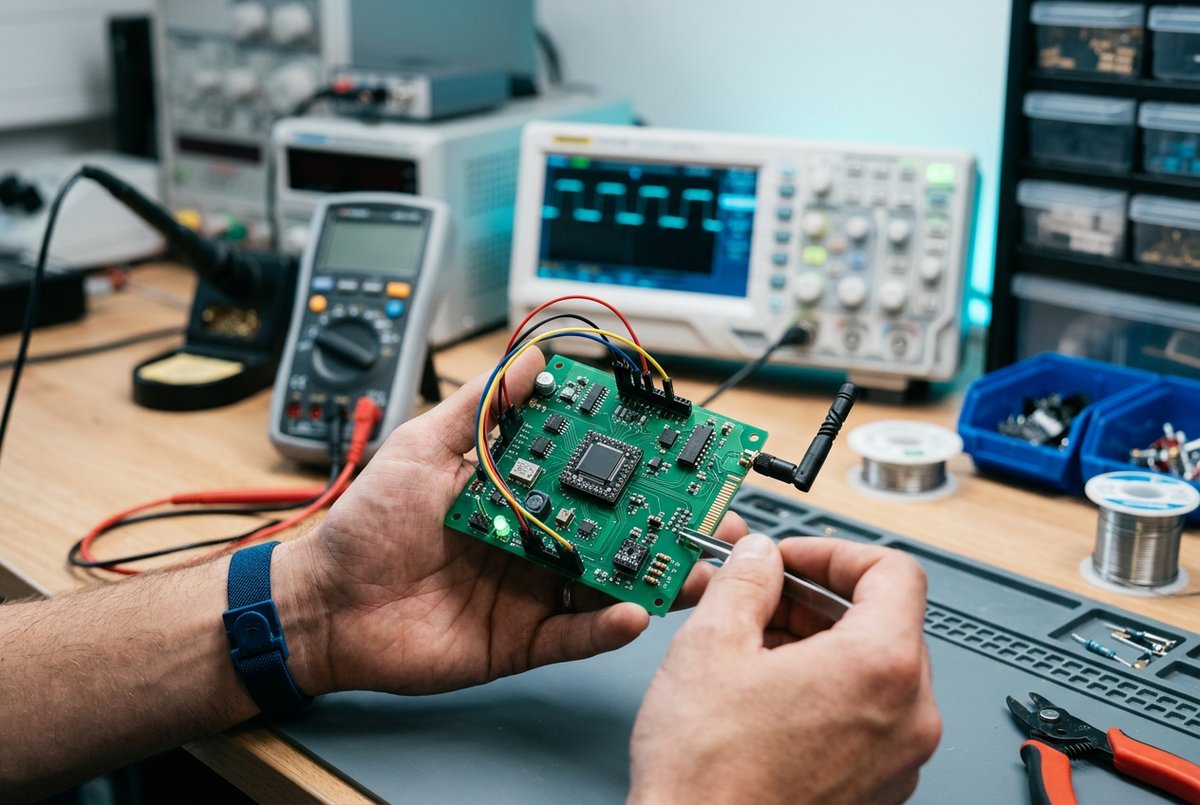
As a company, VISION covers business analysis and process design, custom software development, platform configuration, hosting and infrastructure services, and IoT devices, sensors and hardware prototyping. A defence programme usually needs several at once, across two kinds of work: administration and operations, covering procurement, logistics, maintenance, personnel, documents and case handling; and the connected infrastructure of a base or secured site.
Digital administration and process automation
Internal operations are digitalised through workflow automation, document management and integrated modules for HR, procurement, finance and project management. Approvals, registrations and case files follow a defined route, with every step recorded, which makes compliance checkable.
Logistics is handled the same way, from procurement and inventory management to delivery and tracking, so a request, the stock it draws on and the movement that follows stay traceable in one record.
Situational awareness and crisis management
Data from several sources is brought together into real-time dashboards, GIS maps and operational views, so a unit, a site or a whole estate can be read from one screen. Views are built per audience and per role.
For incidents, automated workflows, alerting and case management support coordinated action across units and agencies, with the sequence of decisions kept for the debrief.
Bases, facilities and connected infrastructure
Vision Smart Platform operates the connected infrastructure of a site: devices, telemetry, rules, dashboards, maps and the registry behind them. Lighting, energy, environmental conditions and technical equipment across buildings are operated as a portfolio rather than site by site, which matters when assets are dispersed and a physical check is slow.
Equipment is described rather than standardised. Models, versions and instances cover a mixed estate of many suppliers and generations, so nothing has to be replaced to simplify the software. Protocols are configurable containerised services, so adding one is provisioning work, and each layer can be adopted on its own.
Surveillance, environment and force protection
Site and perimeter equipment, including lighting, sensors and cameras, is modelled in one registry, with video detections available to rules as events alongside sensor thresholds and time conditions. Rules trigger commands, notifications or parameter changes, with priorities.
Temperature, humidity and particulate readings are held as comparable metrics with thresholds that raise an alert on their own, and consumption is metered per site, building or line.
Asset registry, maintenance and accountability
Every unit is an instance of a version and a model, with its location, parameters and lifecycle from enrollment to retirement. Maintenance planning then works from a current picture instead of a status report assembled by hand.
Access follows the organisation: units, roles and permissions determine who may see and who may act. Practically every entity carries an audit section recording who changed what, with the old and the new value, including changes to configuration. Integration APIs let existing systems read the same data or trigger actions.
Built around your processes
Vision App Maker is the configuration platform underneath this, used in more than 100 implementations. Data structures, forms, business rules and workflows are configured in a visual designer around the organisation that will use them, and integrations with existing systems are added through a plugin mechanism. When a procedure is revised, a unit reorganised or a new class of equipment brought into service, the configuration is changed to match.