Internal requests, documents and approvals brought together in one digital workspace for a central public institution
Vision delivered a workflow and document management platform that brings the internal processes of a central public institution, from leave and business trips to procurement and competitions, into one digital workspace with a complete audit trail.
The project was carried out for a central public administration institution with a nationwide network of territorial offices, serving citizens and businesses. The institution wanted its internal work, meaning requests, approvals, documents and staff processes, to run on one governed digital platform instead of paper, e-mail and separate tools.
Initial Challenges
Internal processes ran through paper forms, signed printouts, e-mail threads and spreadsheets. A leave request, a business-trip order or a procurement need could pass through several departments, each with its own way of recording and approving it.
That made it hard to know where a request was, who had to act next and how long each step took. Documents lived in different places, approvals depended on physical signatures, and the same employee data was kept in several lists. Management lacked reliable information on workload and processing times, and every audit meant reconstructing history by hand. All of this had to stay aligned with internal procedures and normative acts.
The Smart Solution
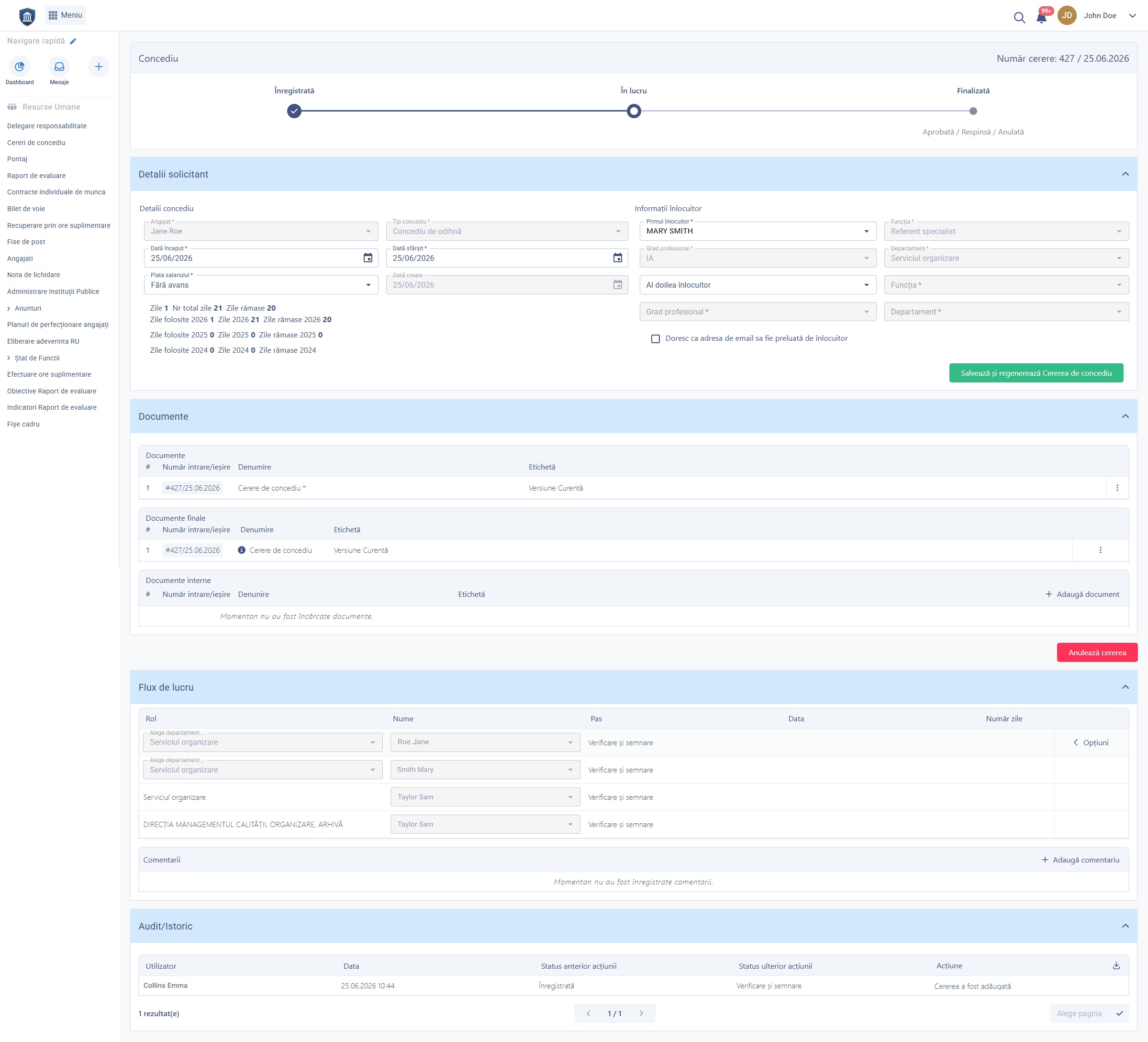
Vision delivered an internal workflow and document management platform, built on the Vision low-code platform and installed in the institution's own infrastructure. Each process is modelled as a workflow with defined steps, roles, deadlines and documents, so the same logic is applied every time and every action is recorded.
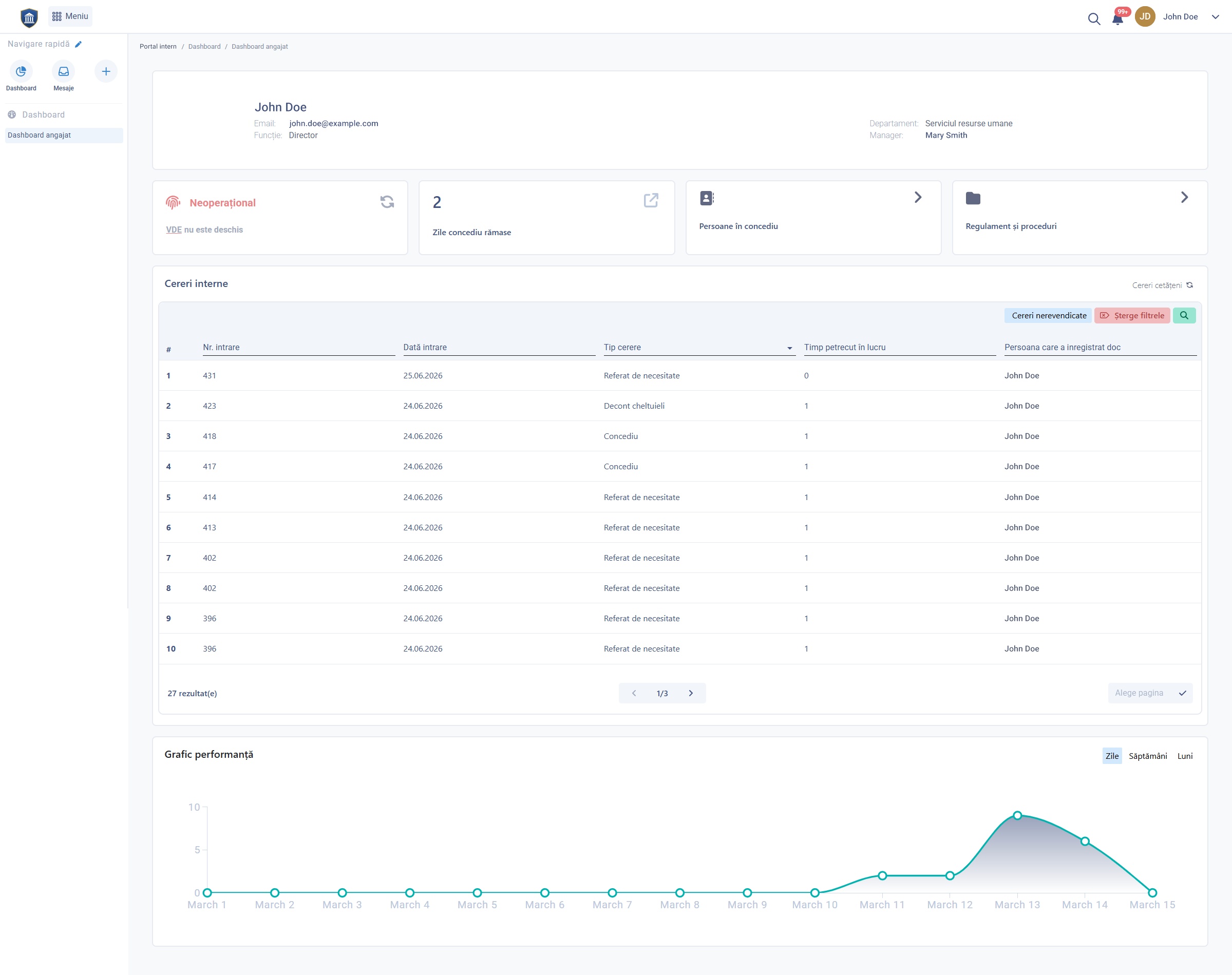
Employees work from one internal portal with a personal dashboard, a menu of modules and a single place for their requests, tasks and notifications. Citizens and candidates use a separate external portal for audience bookings and applications to job competitions. Documents are generated from templates, kept in a workspace and archive, and signed electronically, with scanning and OCR for the paper documents that still arrive.
The platform covers the main internal domains of the institution:
- Human resources: employee files, job descriptions, employment contracts, leave, timesheets, business trips, exit passes, overtime, performance evaluation and training plans.
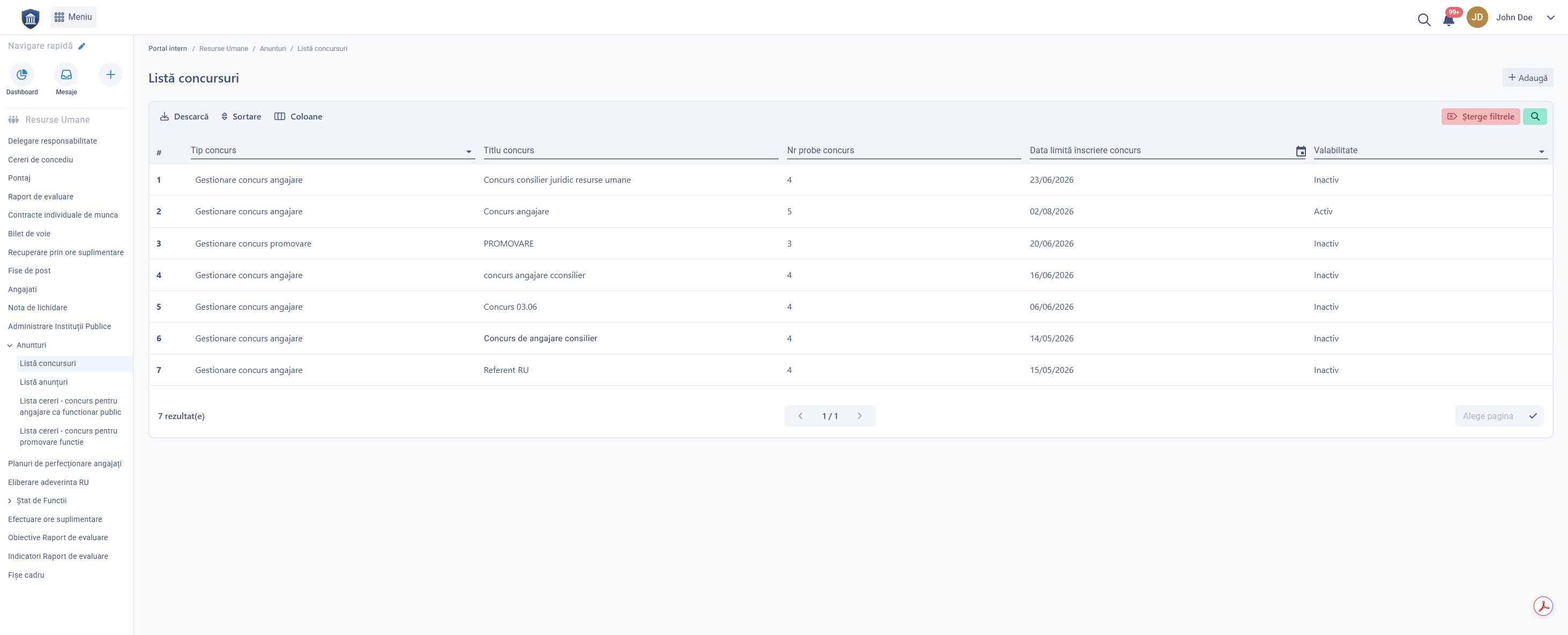
- Recruitment and competitions: hiring, promotion and internship procedures, from announcement to evaluation.
- Audiences and external portal: booking, registrar and management calendars, and applications from citizens and candidates.
- Procurement and finance: needs referrals, acquisition plans, procedures, contracts, expense reports, invoices and treasury statements.
- Internal control, audit and archive: conflict-of-interest register, managerial control, audit and archive copies.
- Project management: projects, funding, partners and budgets.
- Documents and signing: scanning and OCR, workspace, ad hoc workflows and electronic signature.
- Administration and integrations: users, roles, organizational structure, services and normative acts, with links to the corporate directory and single sign-on, the national labour register, the e-invoicing system and the e-learning platform.
Implementation Insights
The work followed the institution's own procedure: analysis of existing flows, design of each process, development, testing, user training and go-live. About thirty processes were mapped, most of them internal, and each was validated with the department that owns it, such as human resources, economic, internal control, project management and audiences, before it was built.
Roles and permissions follow the organizational structure, so people see only what concerns their position, while single sign-on keeps access aligned with the existing directory. The platform runs on a virtual appliance in the institution's own environment, which met its security and data requirements. Acceptance testing covered twelve functional areas through 45 scenarios, all accepted, and was followed by training for administrators and users.
Results & Impact
The institution now runs its internal processes on one digital platform, with a clear trace of every request from registration to final approval.
Operational Results:
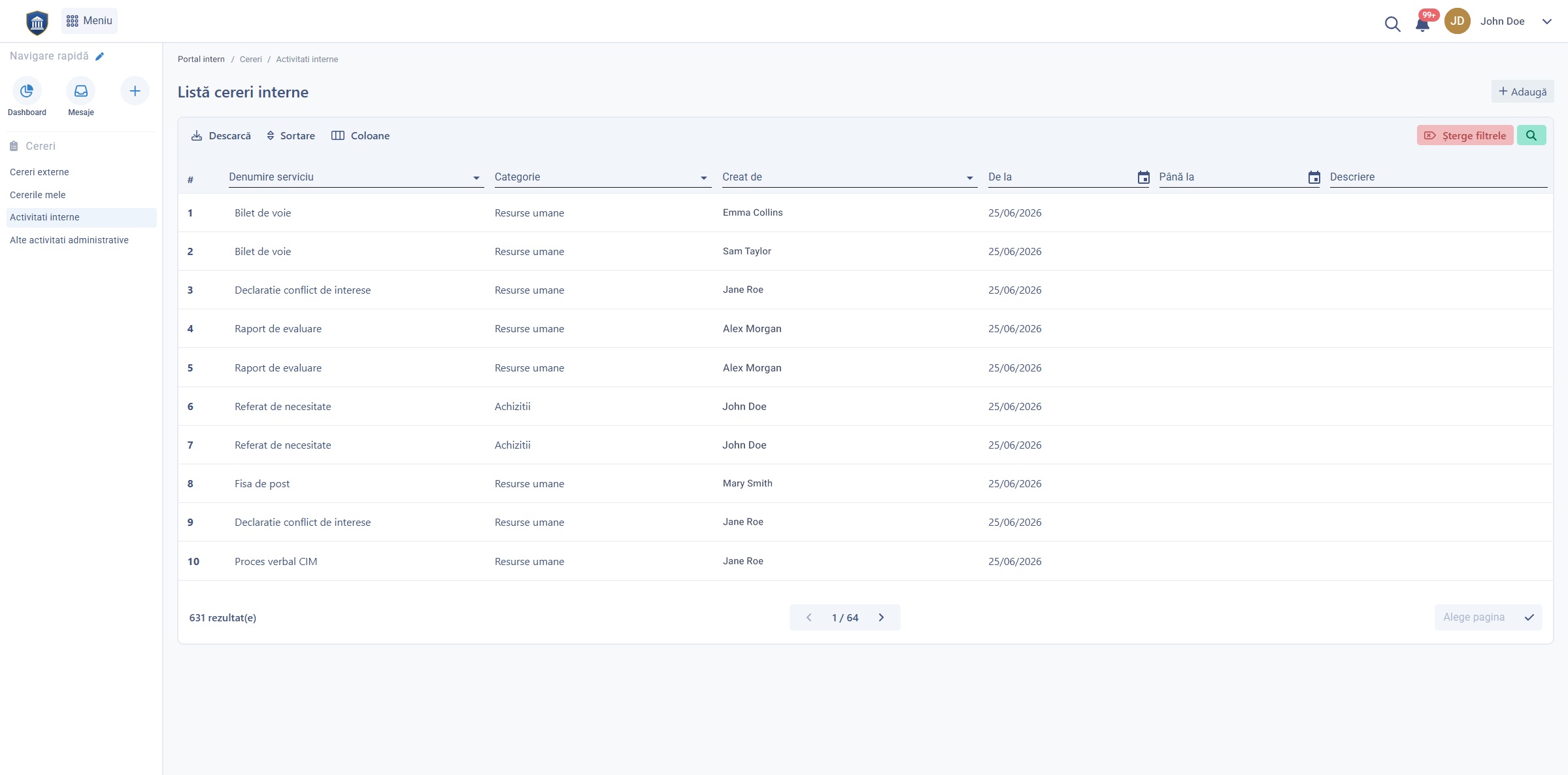
- One place for every request. Leave, trips, exit passes, overtime, evaluations, procurement and other internal requests follow the same guided workflow and the same status view.
- Digital documents and signatures. Forms are generated from templates, stored in a workspace and signed electronically, reducing printing and manual circulation.
- Full audit trail. Every step, user and date is recorded in the request history, which simplifies internal control and audits.
- Visibility on workload. Dashboards show open requests and time spent per step, so bottlenecks can be seen and addressed.
Business Results:
- Consistent processes. The same rules apply in every department, aligned with internal procedures and normative acts.
- Faster, more transparent service. Citizens and candidates book audiences and apply online through the external portal.
- Better reporting. Management gets reliable information on processing times and activity, based on data collected as the work happens.
- Foundation for further digitalization. New processes can be added on the same platform without starting a new project from scratch.
Lessons Learned & Key Takeaways
Digitalizing internal work is mostly about agreeing on the process before building it. Validating each flow with the department that owns it avoided rework and built trust among users.
Starting with high-volume, well-defined processes such as human resources made results visible quickly, and a common structure of roles, documents and statuses made every later process faster to model. Finally, connecting the platform to the existing identity and national systems kept it from becoming one more isolated tool.