Unified patient, lead and campaign management for a multi-clinic healthcare group
Vision365 gives a private medical network a single customer layer above its medical information system: every call, lead, patient, subscription, corporate contract and marketing campaign in one place, while clinical data stays in the source system.
The project was carried out for a private healthcare network in Bucharest, Romania, operating outpatient clinics, a hospital, a family hospital and a senior residence, and selling both individual and corporate health subscriptions. The organization aimed to manage every contact with patients and companies in one CRM, from the first phone call to the active subscription.
Initial Challenges
Patients reach a medical network through many doors: calls to the contact centre, brokers, web forms, marketing campaigns and corporate agreements. Each door produced its own record, so the same person could exist several times and no one could see the complete relationship with them.
Operators could not tell quickly whether a caller was already a patient, leads were hard to connect to the appointments they produced, and sales teams lacked a single view of a patient's subscriptions, visits and investigations. Marketing had no reliable way to link campaign activity to the leads and revenue it generated.
The Smart Solution
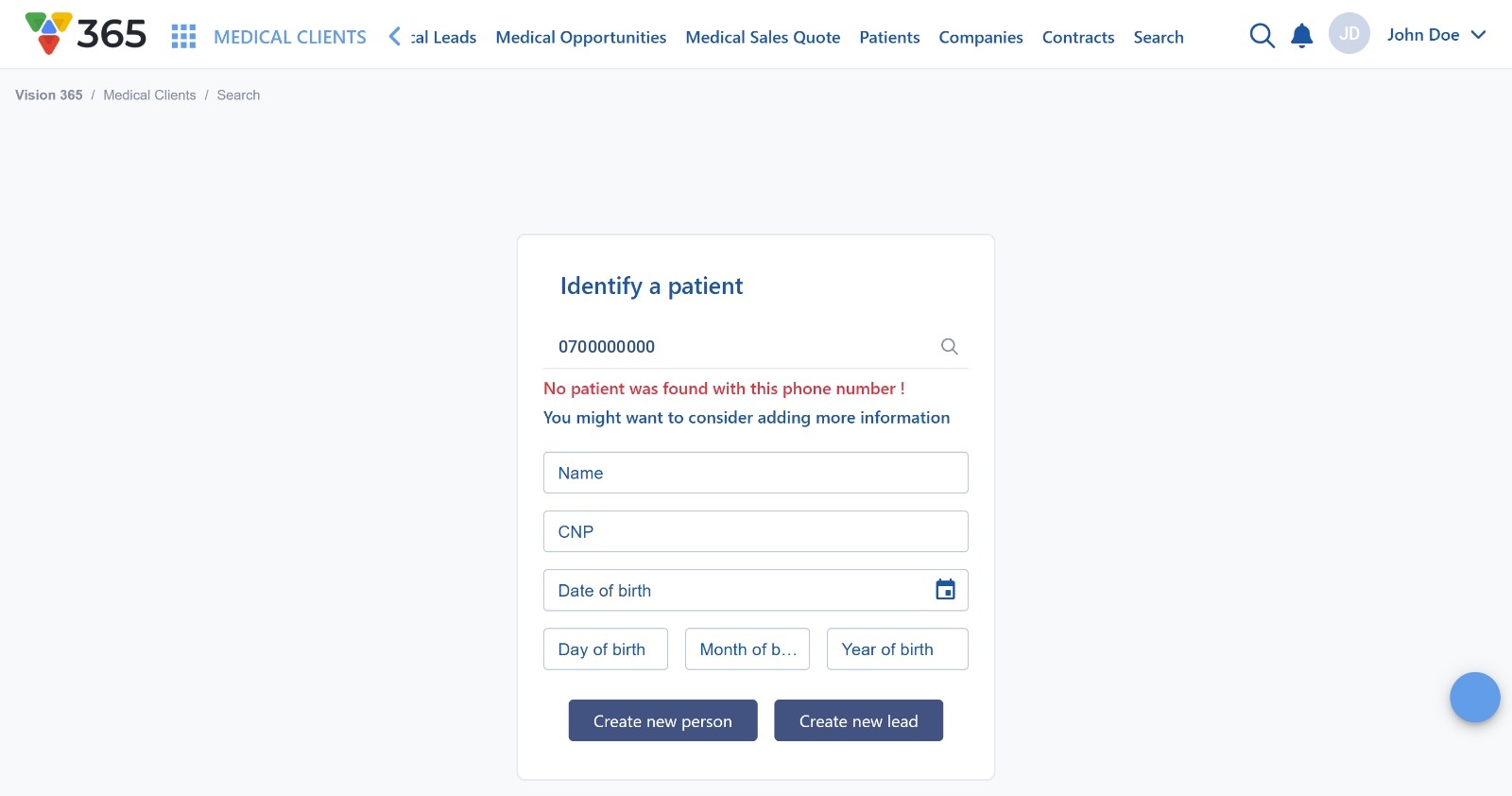
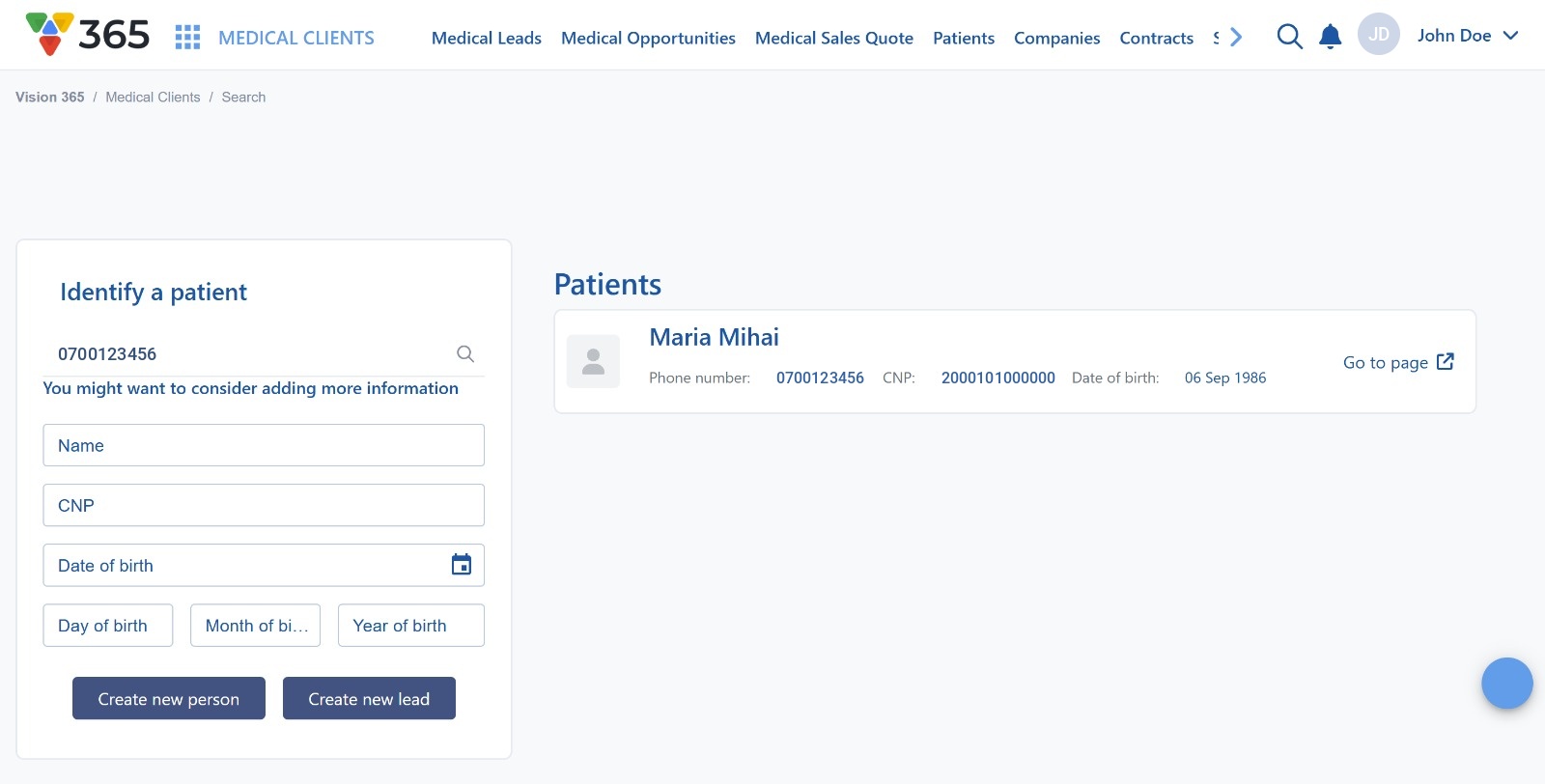
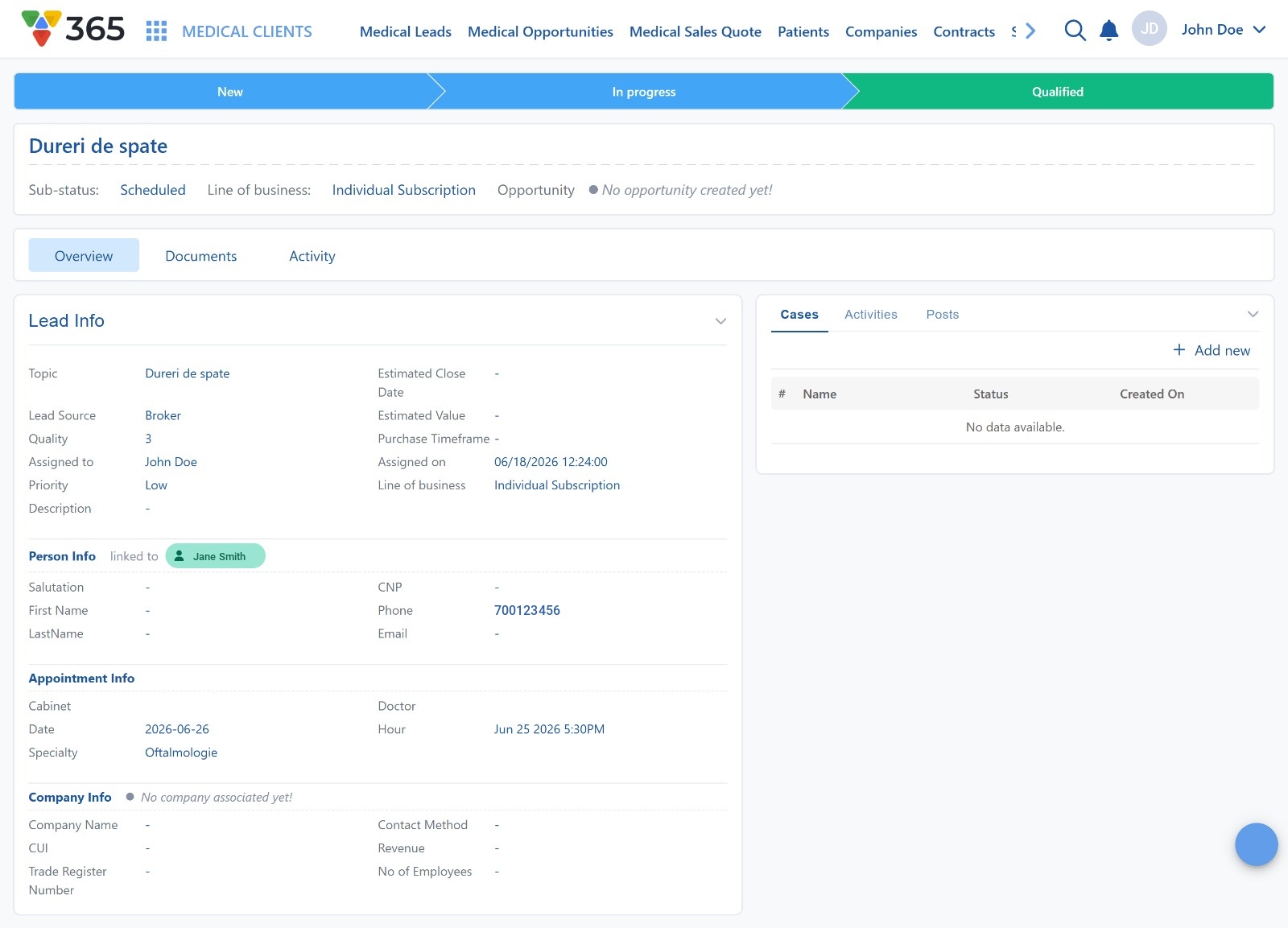
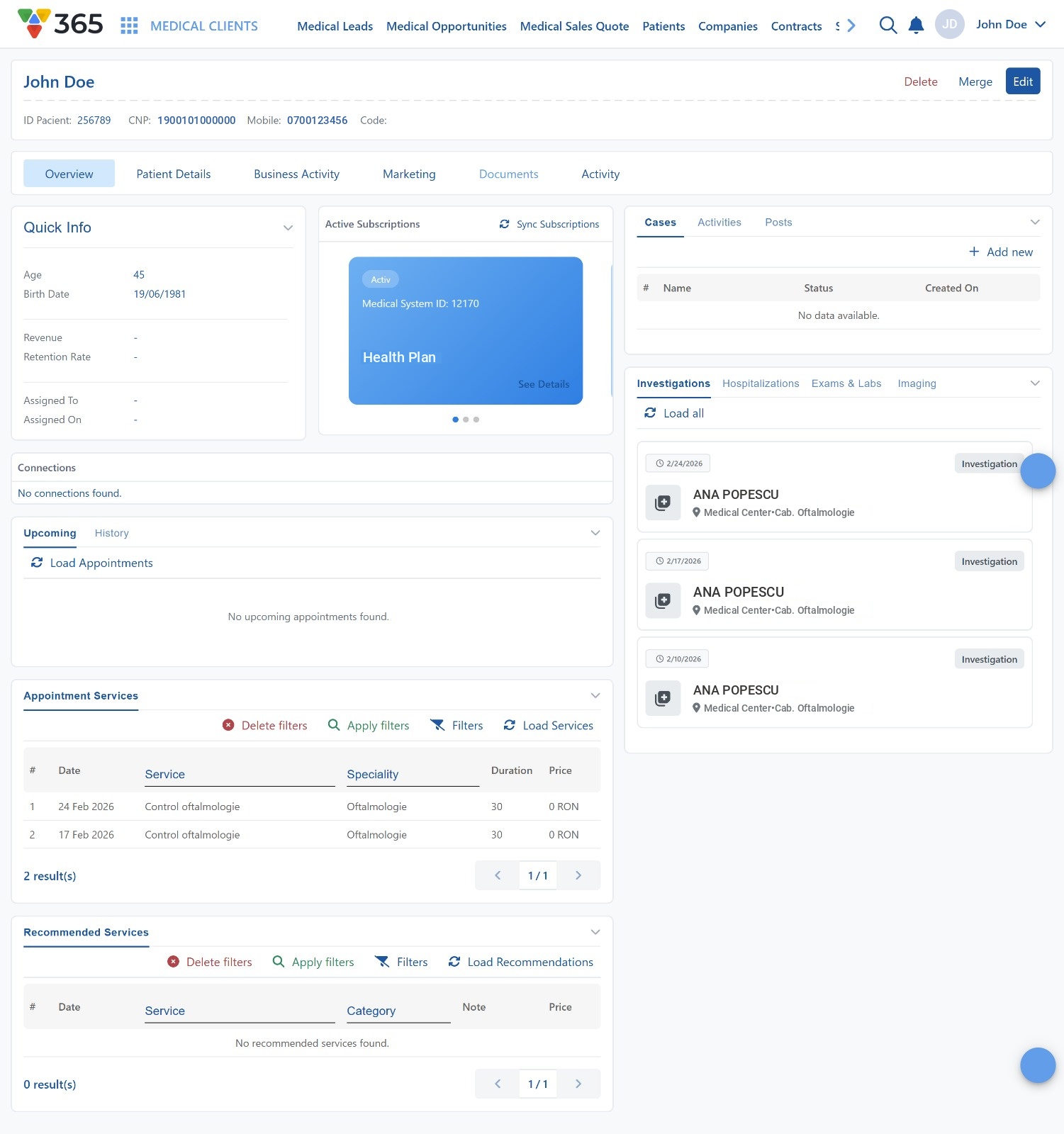
Vision365 was configured as a medical CRM that sits on top of the clinic's medical information system instead of replacing it. At first contact, the operator searches by phone number, name, national ID or date of birth: if the patient exists, the right record opens, and if not, a new person or lead is created on the spot. Leads move through a clear pipeline from New to Qualified, with sub-status, line of business and appointment details. The Patient 360 page then brings together quick info, active subscriptions, upcoming appointments, recommended services, cases, investigations, hospitalizations, labs and imaging.
Opportunities, sales quotes with an approval workflow, corporate companies and contracts, and marketing segments and campaigns with source attribution complete the picture. Role-based access gives the call centre, sales, corporate, marketing, reception, finance and administration teams exactly the screens and data their work requires.
Implementation Insights
A clear boundary between systems was the first design decision: the CRM owns the commercial relationship, while medical scheduling, clinical data and primary medical billing stay in the medical information system and appear in the CRM as read-only references. Duplicate prevention received particular attention, including the case where several people share one phone number and the operator must choose the right context. The call-centre flow starts from the telephony system and opens the patient context in Vision365. The solution was prepared for user acceptance testing with a guide organized by role, with test scenarios, synthetic data, access-control checks and audit trails for critical actions.
Results & Impact
The platform delivers the following outcomes for the medical network.
Operational Results:
- Faster patient identification at first contact, by phone number or personal data, with a guided path to create a person or lead when no match is found
- Duplicate-free records, with controlled handling of shared phone numbers
- A single Patient 360 view of subscriptions, appointments, investigations and open cases, synchronised from the medical system
- Full traceability from the first call to the scheduled appointment, qualified lead, offer and contract
Business Results:
- A consistent sales process, with approval thresholds for quotes and a complete history of owner changes
- Corporate accounts, contacts, contracts and beneficiaries managed alongside individual patients
- Campaigns tied to outcomes: leads keep their campaign and source, so cost per lead and return on investment can be measured
- Protected patient data through role-scoped access and audit trails
Lessons Learned & Key Takeaways
Agreeing early on which system is the source of truth for each type of data prevented overlap and kept the CRM focused on the relationship with the patient. Identification at the first call deserves special care, because everything downstream depends on linking the right person. Organizing tests by role, with realistic scenarios and anonymized data, helped each team validate the platform against its own daily work. Treating marketing, sales and the call centre as one pipeline, rather than separate tools, turns scattered contacts into a measurable patient journey.