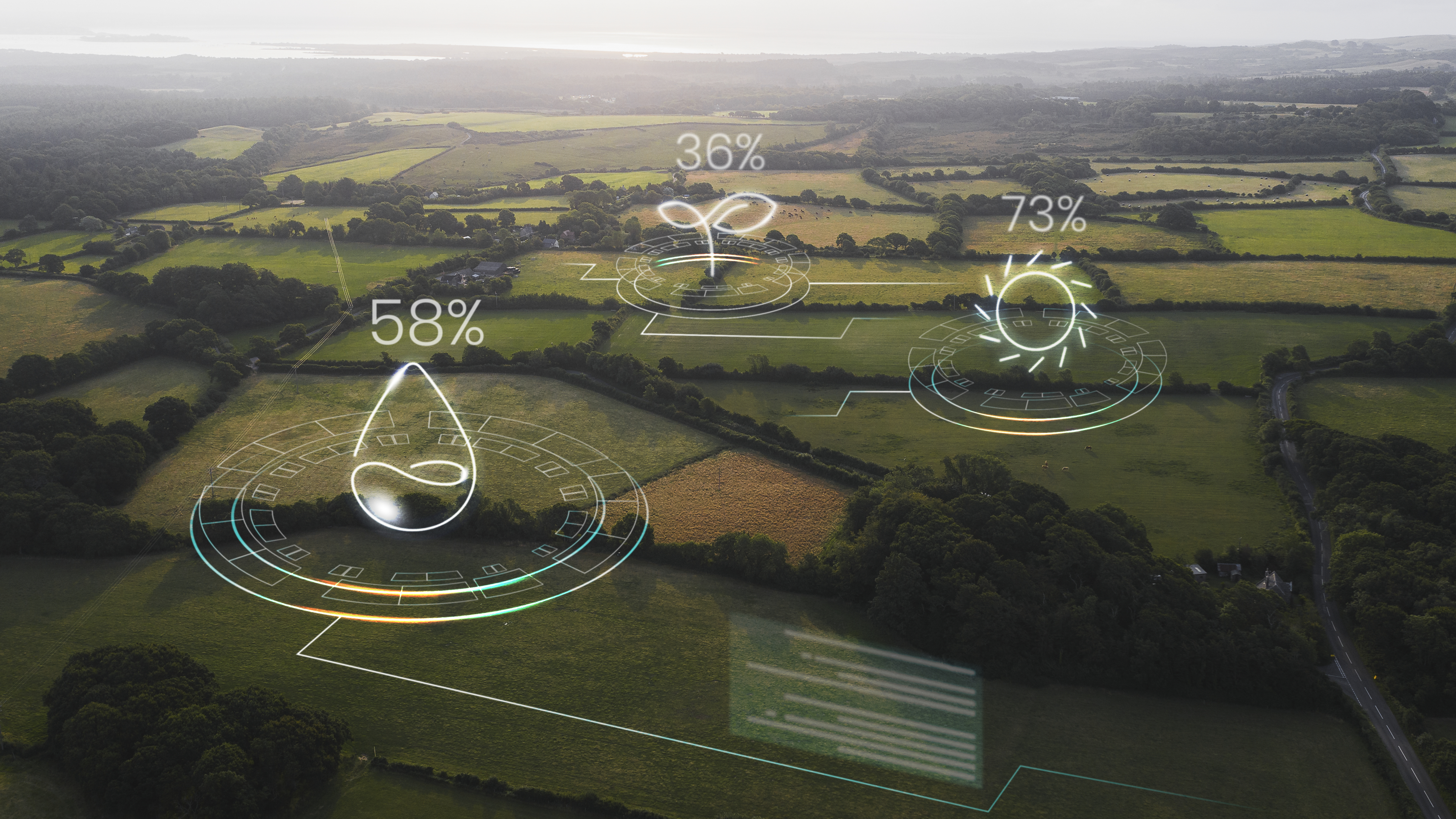
Growing conditions change from hour to hour and from one field to the next, and the decisions that follow — when to irrigate, when to spray, when to move stock — depend on knowing what those conditions are. VISION builds the software layer between the sensors in the field and the people who act on them.
Vision Smart Platform is our IoT platform. It registers devices, turns their payloads into readings that carry a unit and a timestamp, applies rules to those readings, and shows the result on dashboards and maps. It was built for equipment spread across a territory. Alongside it, the agricultural register used by Romanian local administration runs as a module of Vision Smart Digital City.
From the sensor to a stored reading
A deployment runs in stages: the sensor reports over LoRaWAN, cellular or a wired link, a gateway collects it, a protocol instance handles the transport, and the platform stores the value. Each protocol is a configurable, containerised service instance.
Device families are described once. A soil probe or a weather station is a model and a version, and the units in the ground are instances that inherit it. Where a payload needs interpreting, the controller carries its own CODEC definition, so a new supplier does not require a platform release.
Conditions as comparable numbers
Readings are persisted as metrics with their unit and timestamp, so two locations can be compared without exporting from two portals and reconciling them by hand. Temperature, humidity and airborne particulates are handled this way, and the same metric templates cover other sensor families you attach. Reporting is periodic or conditional, so a device sends on a schedule or only when something changes.
Thresholds that act on their own
Thresholds are set in configuration, without a code change. When a reading crosses one, a rule evaluates it, an effect fires, the new state becomes visible and the history is kept. Rules also read device state and the age of the last value, so a station that stops reporting raises an alert. Changes are recorded with their old and new values.
Readings tied to a place
A reading with no location tells you that something happened and not where to send anyone. Devices sit on a map, group into areas, routes or systems, and appear on dashboards beside the metrics they report. Each group keeps its own inventory and retention policy.
The agricultural register for local administration
For town halls and communes, the agricultural register module of Vision Smart Digital City holds the record: households and their members, land parcels and usage categories, crops, animals, equipment and buildings, organised by the legal chapters. More than twenty configurable certificate types are issued from it, including producer attestations with commercialisation records, APIA subsidy documents, land ownership certificates, sale offers under Law 17/2014, leases and concessions.
The register is filled in once and the certificates come out of it. It works with the tax module and with a GIS component for parcel geometry, and can run on its own or be added to an existing installation.
Built around your processes
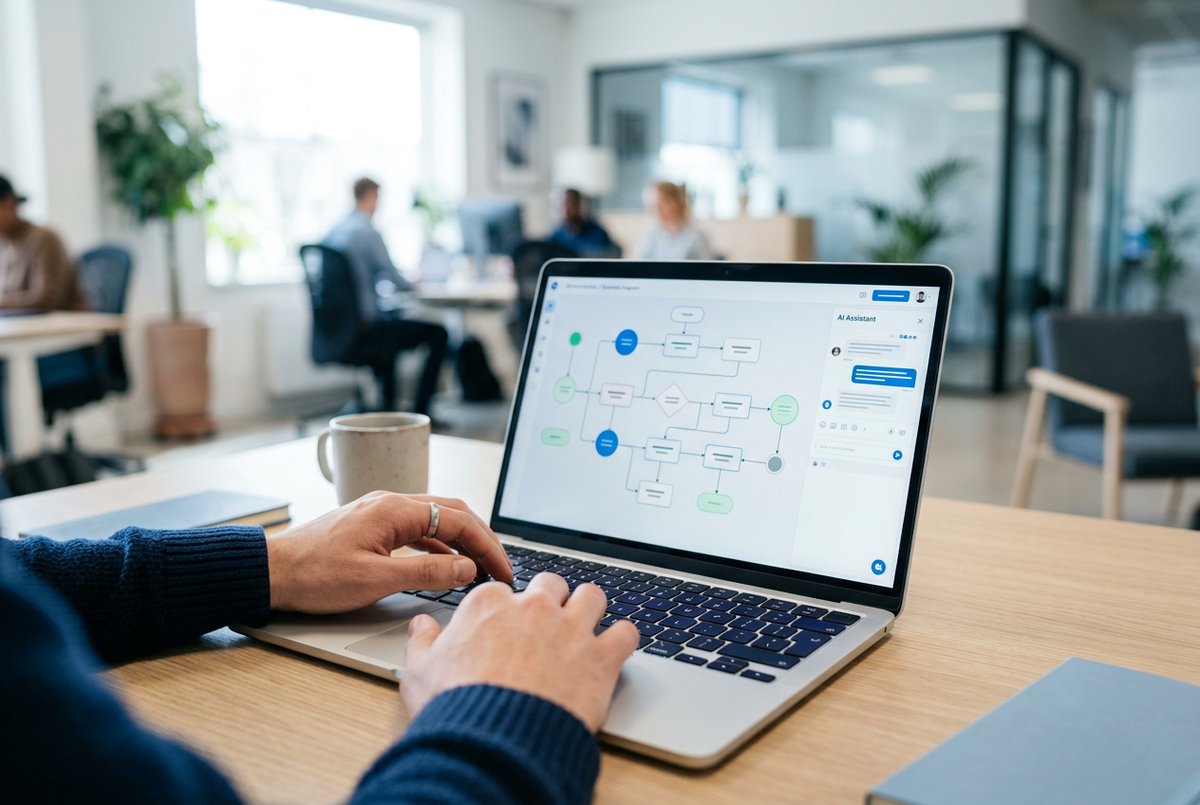
Vision App Maker is our low-code platform, used across more than a hundred industry implementations. Applications are built in a visual designer: data structures, forms, business rules and workflows configured around how the organisation works — its crops, its plots, its inspection rounds, its approvals.
This matters most when the process changes. A new subsidy scheme, a different reporting obligation or a reorganised field team is handled as a configuration change.